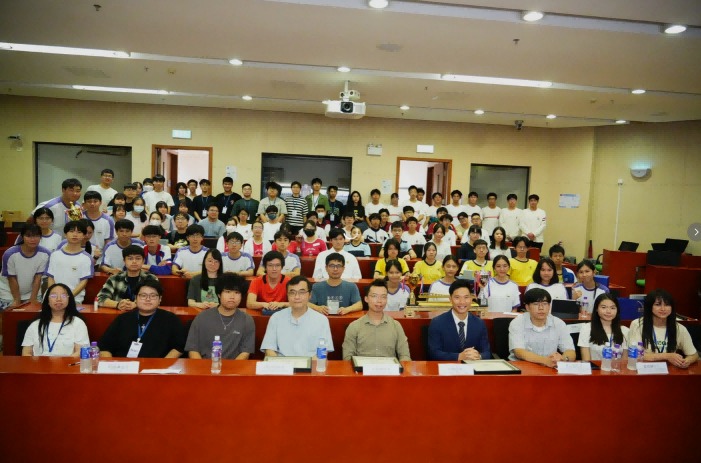
Recently, the Bridge Structure Contest of the 17th Construction Technology Competition was successfully held. Professor Li Huachao, Director of the Department of Environmental and Light-Textile Engineering at the Hong Kong Academy of Technology and Vice President of the Macau Institution of Engineers, was invited to serve as a guest judge for the event. He participated throughout in the contest’s judging and academic exchange activities, contributing to the cultivation of young engineering talent in Hong Kong and Macau and the enhancement of their scientific and technological innovation capabilities.
This Bridge Structure Contest focused on engineering practice and innovative application, providing a high-quality platform where theory empowers practice and competition hones skills. Professor Li Huachao expressed his gratitude to the organizers for their meticulous organization and sincere invitation. He noted that the contest was closely aligned with the core of construction engineering, effectively helping participating students consolidate their professional foundation in structural design and familiarize themselves with engineering practice standards. By promoting learning and skill-building through competition, the event fully stimulated the innovative engineering thinking and hands-on application abilities of young students, serving as an important practical vehicle for cultivating reserve engineering talent in the new era.
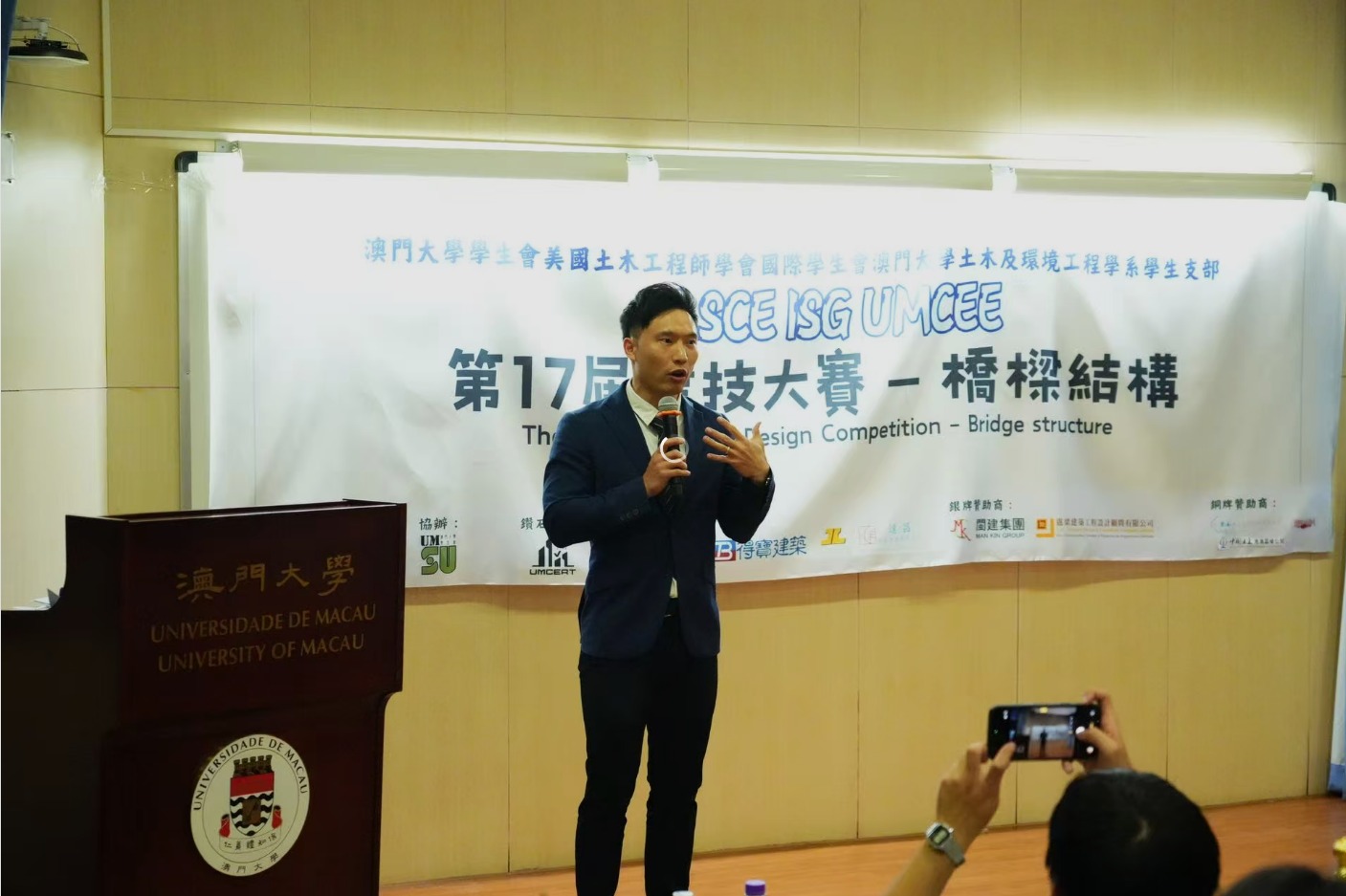
During the sharing and exchange session of the contest, Li Huachao, drawing on the realities of Macau’s engineering construction and industrial development, stated that technological innovation and talent reserves are the cornerstone of high-quality regional development. The continued organization of high-level engineering discipline competitions can precisely identify and nurture young science and engineering talent, continuously strengthening Macau’s engineering talent pipeline. Such efforts inject fresh vitality into Macau’s four major construction projects and the development of high-tech industries, while steadily promoting the moderate economic diversification of Macau.
Li Huachao pointed out that Macau should leverage various sci-tech innovation competitions and industry exchange platforms to continuously reinforce the foundation of talent cultivation and pool efforts to build itself into a hub for international high-end talent and a platform for opening-up and cooperation. With high-quality engineering talent resources, Macau should deeply engage in the Macau-Hengqin coordinated development and major national regional cooperation projects, as well as key engineering construction initiatives such as rail transit. Through high-quality engineering construction, people’s well-being and livelihood can be improved, while Macau’s engineering development and talent cultivation are further integrated into the national development strategy, contributing to the coordinated high-quality development of the Guangdong-Hong Kong-Macao Greater Bay Area.
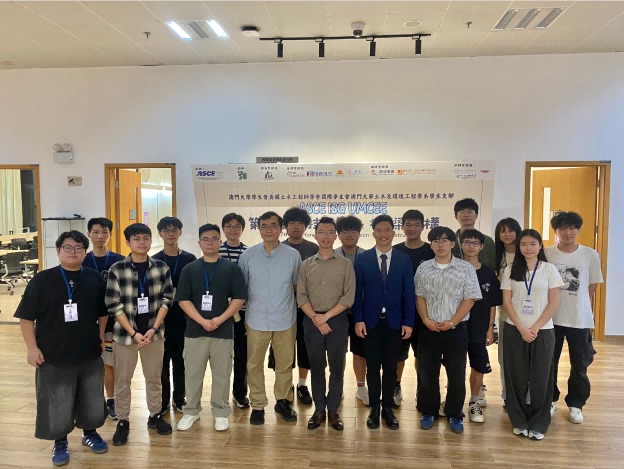
This contest served as both a collective assessment of the professional competence of young engineering students in Hong Kong and Macau and a powerful initiative to deepen academic exchanges in the engineering field and consolidate the sci-tech talent cultivation system. It has built an important bridge of mutual exchange and shared progress for regional engineering technology innovation, industrial coordinated development, and the growth of young talent.