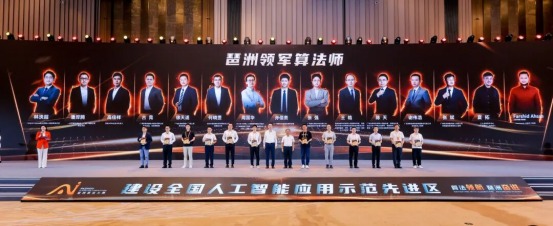
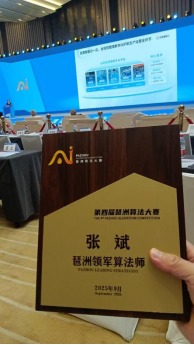
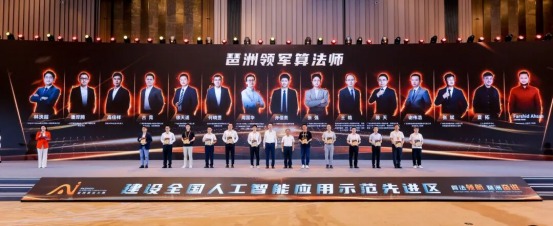
Nandu Bay Finance News: At the Ecosystem Empowerment Conference of the 4th Pazhou Algorithm Competition, Professor Zhang Bin, Chairman of the Science and Technology Professional Committee of the Hong Kong Technology Research Institute, was awarded the title of “Pazhou Leading Algorithm Engineer.”
“Pazhou Leading Algorithm Engineers” can be included in the “fast track” for Guangdong Province’s artificial intelligence technical talent professional title evaluation in the following year. The 15 newly selected “Pazhou Leading Algorithm Engineers” all represent, to a certain extent, the latest trends in the industry.
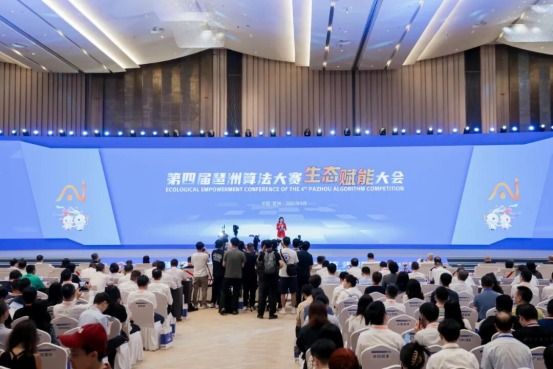
Themed “Algorithms Leading the Way, Pazhou Forging Ahead,” this year’s competition brought together 8,131 teams from more than 30 countries worldwide — including China, Japan, Kenya, France, the United States, Singapore, and Italy — to compete on the same stage, setting a record as the largest algorithm competition in China and sending a powerful “Chinese voice” in the field of artificial intelligence to the world!
From Breaking the Ice to the Peak
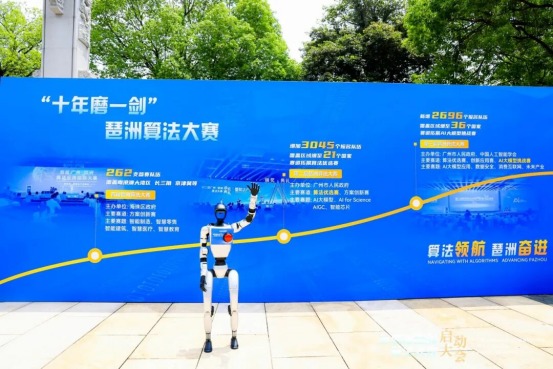
The Pazhou Algorithm Competition — the “critical strategic move” in the Guangdong-Hong Kong-Macao Greater Bay Area’s artificial intelligence layout — has, since its launch in 2022, accomplished an astonishing leap from “breaking the ice” to “domestic top-tier” status with thunderous momentum.
In 2022, the inaugural competition was hosted by the Haizhu District People’s Government, breaking new ground by attracting 262 domestic teams to compete and sounding “Guangzhou’s voice” in the algorithm field for the first time.
In 2023, the second edition was fully upgraded, hosted by the Guangzhou Municipal People’s Government. Focusing on five major fields — industry, healthcare, transportation, energy, and technology — it attracted more than 3,300 teams from 21 countries worldwide, doubling in scale with explosive popularity.
In 2024, the third edition achieved a magnificent transformation. With the powerful addition of “national team” institutions such as the China Academy of Information and Communications Technology (CAICT) and the Chinese Association for Artificial Intelligence (CAAI), the competition launched its first large model challenge and innovatively introduced an “enterprises set the questions, the world solves them” model. A total of 6,003 teams competed globally, igniting a wave of innovation.
Furthermore, the third competition became a “golden stepping stone” for young talent to fast-track directly into major tech companies and prestigious universities. Last year’s champion competitors secured offers from leading internet companies or were admitted to QS Top 50 universities worldwide, and some even transformed their competition achievements into top-tier conference papers.

“This is not merely a competition — it is a global platform that attracts talent through competition, draws investment through competition, and clusters industry through competition,” said the head of the competition’s organizing committee. Over the past three years, the competition has cumulatively selected 41 “Pazhou Leading Algorithm Engineers” and 14 “Pazhou Rising Algorithm Engineers,” brought in 170 talent teams, and facilitated the establishment of more than 60 enterprises, including the national headquarters of Baidu ARM Cloud. The artificial intelligence industry is rapidly clustering and flourishing here.
This year’s competition was hosted by the Guangzhou Municipal People’s Government and the Chinese Association for Artificial Intelligence. Focused on real industry needs and an innovative market-based competition model, it has become a “new calling card” for China’s artificial intelligence field, a “new window” for gathering global wisdom, and a “new platform” for the emergence of technology enterprises.
The conference specially created a 30-meter-long “Industrial Walk of Fame” showcasing the large model innovation achievements of both the competition and Pazhou.
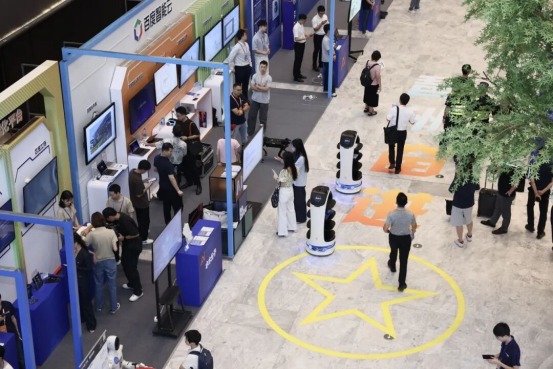
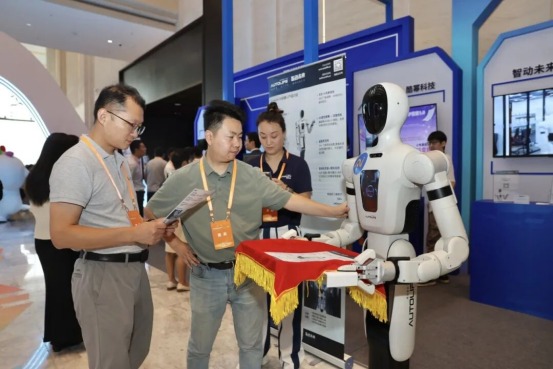
A total of 183 teams advanced to the finals in this year’s competition, with 82 teams receiving awards. For the first time, the conference included outstanding contestants in the recommendation roster for the “Wu Wenjun Artificial Intelligence Science and Technology Award,” underscoring the competition’s authority and influence in recommending exceptional talent.
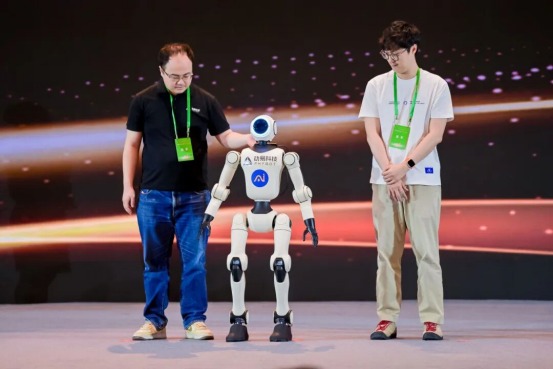
The fourth competition’s rise to the ranks of top international events stems from the five core qualities it has consistently upheld and deepened: internationality, professionalism, practicality, fairness, and openness.
Highlight 1: A Gathering of Top Talent and Cross-Ocean Interaction — Growing International Presence
This year’s competition set a record for participation scope, forming a landscape of “rooted in the Greater Bay Area, connecting the whole country, and radiating across the globe.”
Top teams from 30 countries worldwide actively participated. A total of 8,131 teams registered — a 35.4% increase — of which 651 teams came from overseas, up 26.9%. National specialized, refined, distinctive, and innovative (SRDI) enterprises and high-tech enterprises accounted for 60% of participating companies. Six of the QS Top 10 universities globally took part, and teams from 140 QS Top 100 universities registered, including MIT, Harvard, Cambridge, Peking University, and Tsinghua University.
The inaugural “International AI Competition” staged a summit showdown between Chinese and international algorithm elites, building a “golden bridge” for artificial intelligence cooperation. This initiative successfully constructed a cross-border, top-tier network for technical exchange and collaborative innovation, enabling China’s open and cooperative AI ecosystem to shine brilliantly on the international stage.
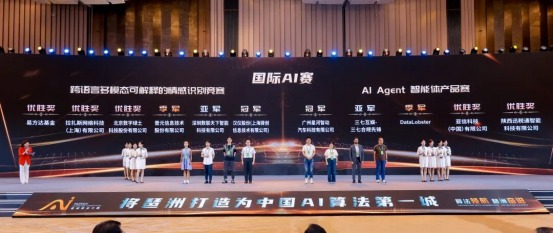
Highlight 2: Professional Authority at the Forefront — An “Explosion” of Innovation Outcomes
The competition’s results have gained broad industry recognition. Beyond million-yuan prize money, it provides tens of millions in dedicated incubation resources, including computing power vouchers, talent rewards, and financing loans. “Pazhou Leading Algorithm Engineers” can be included in the “fast track” of Guangdong Province’s AI technical talent professional title evaluation in the following year. The 15 newly selected “Pazhou Leading Algorithm Engineers” all represent, to a certain extent, the latest industry trends, delivering productivity improvements to fields such as healthcare and the industrial internet and effectively advancing the integration of research and industry.
What commands the most attention is that the Pazhou Algorithm Competition Organizing Committee has officially become a nominating entity for the “Wu Wenjun Artificial Intelligence Science and Technology Award.”
“This is the highest honor in China’s intelligent technology!” said an industry insider. The “Wu Wenjun Award” was established by the Chinese Association for Artificial Intelligence and holds the qualification to nominate candidates for the National Science and Technology Award, symbolizing the highest honor in the field of artificial intelligence. According to publicly available information, apart from the Pazhou Algorithm Competition Organizing Committee, the other eight categories of “Wu Wenjun Award” nominating entities are all national or provincial-level authoritative institutions.
Highlight 3: A Distinct Practical Orientation — Bringing Innovation and Industry to “Zero Distance”
This year’s competition emphasized “competing for practical use,” zeroing in on the difficulties, pain points, and bottlenecks in enterprise development, and driving algorithm innovation and real-world application through authentic scenarios.
In the AI Large Model Algorithm Selection track, 13 brand cup competitions independently hosted by enterprises such as Hello and China Telecom were established to address real pain points that are “high-value, high-difficulty, and high-frequency.”
“We have found the golden key to solving the intelligent transformation of critical infrastructure,” said a relevant corporate executive. China Southern Power Grid, which has served as a challenge-setting enterprise for two consecutive editions, has turned the competition into a platform for resolving business bottlenecks, establishing long-term cooperation with the competition’s selected teams and fostering innovation in areas such as new energy vehicle charging pile allocation and corporate carbon emission accounting.
Highlight 4: Fairness Throughout — Building a Transparent and Trustworthy Competition Environment
From mechanism design to evaluation execution, this year’s competition was comprehensively optimized, providing every participant with a clear and standardized competitive environment.
The competition assembled a heavyweight academician-level judging panel. Led by Academician Dai Qionghai, Academician Chen Junlong, Professor Wei Shaojun, and Professor Xie Shengli, and bringing together more than 100 senior experts from universities, leading enterprises, and investment institutions, the panel ensured that the evaluation process was authoritative and rigorous.
The judging mechanism emphasizes a dual-dimensional “technology + application” assessment, focusing not only on algorithm innovation and performance but also on applicability and implementation potential in real business operations, elevating the industrial value and transformation efficiency of award-winning projects to unprecedented heights.
Highlight 5: Open Collaboration — Jointly Building an Innovation Ecosystem
The competition spanned five months. From the very start, it collected challenge topics from around the world and innovatively laid out five tracks — the “Air-Ground” Integrated Collaborative AI Competition, AI Large Model Algorithm Selection, AI Innovative Application Competition, “National Games” AI Competition for All, and International AI Competition — covering 19 challenge topics. It completely broke through limitations of geography, organization, and identity, encouraging cross-field and cross-regional collaborative innovation.
The inaugural “National Games” AI Competition for All was a particular highlight. Under the theme “Future National Games, Technology in Motion,” it extended an open invitation to the general public to create works with generative AI, attracting 1,329 teams to participate. Ten teams each received the Best Creativity Award and the Most Popular Award, truly realizing “open-door competition hosting” and allowing the benefits of AI innovation to reach a broader audience.
The conference debuted multiple major collaborations and innovation achievements on site. Keynote speeches by top experts offered profound insights into the future of the industry. Innovative thinking surged throughout the venue, while consensus and confidence continued to build.